

These ai in dtc statistics show where AI is changing ecommerce in 2026: adoption is high, discovery is moving into AI assistants, CX expectations are rising, and trust is the brake.
7:42am. Coffee. Spreadsheet open.
Another AI stat on LinkedIn. Another “AI changes everything” report. Another founder asking if this is real or just a vendor with a PDF.
Fair question.
The numbers below are not here to make AI sound inevitable. They are here to help a lean DTC team decide what to test, what to systemize, and what to ignore.
Table of Contents
- In a sentence
- How to read these AI in DTC statistics
- What do AI adoption and budget statistics show?
- What do AI search and discovery statistics show?
- What do personalization statistics show?
- What do retention and customer experience statistics show?
- What do AI profit and ops statistics show?
- What do AI data and trust statistics show?
- What would I do with these numbers?
- Sources for every statistic
In a sentence
- AI adoption is no longer the differentiator. The operator gap is ownership, data quality, and review.
- AI discovery is real, but still early. Treat it like a new high-intent channel, not a replacement for owned search, email, or conversion work.
- Customer-facing AI has a trust ceiling. People like faster shopping, but payment, privacy, and bad recommendations still make them pause.
- The best first AI projects are boring: support triage, inventory review, product data cleanup, retention segmentation, and weekly exception reports.
- If a vendor stat cannot survive one source check, do not build a roadmap around it.
How to read these AI in DTC statistics
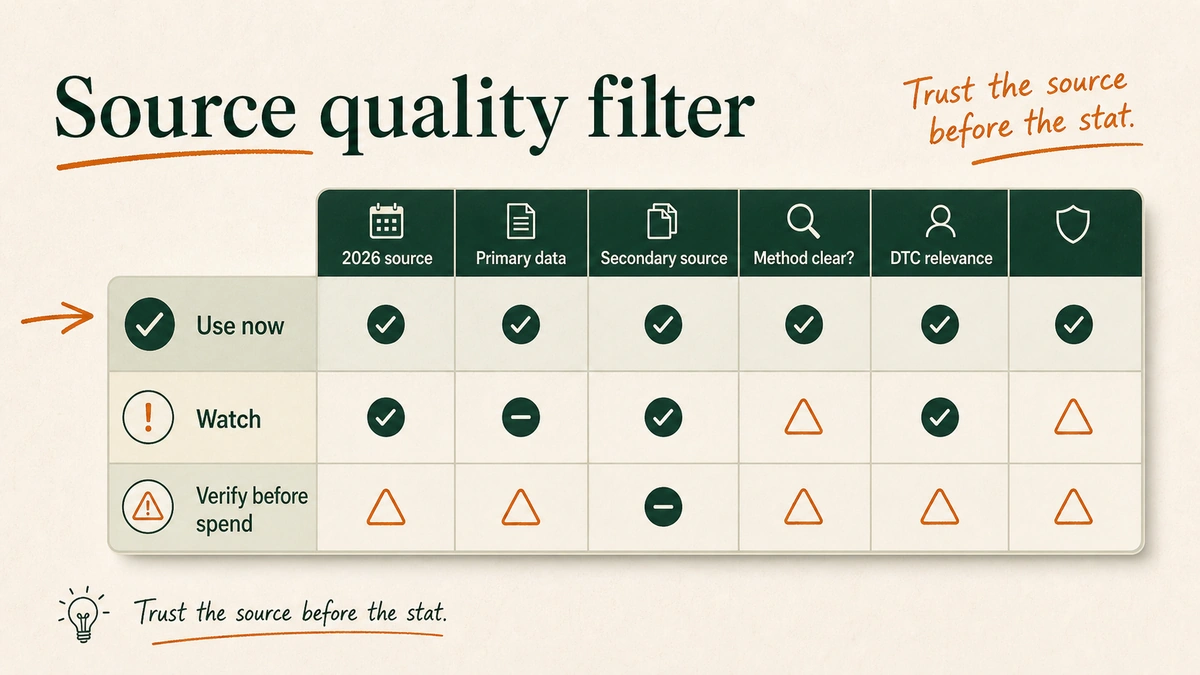
I sorted these by recency first, then source quality. A 2026 ecommerce AI report beats a 2023 generic retail stat. A source-of-record beats a blog that links to another blog that links to a report.
In our work, that filter matters more than the headline number. I would rather use one narrow stat with a clear source than five impressive claims with no method.
We tested that filter while building this list. I measured each candidate stat against recency, source quality, and whether a lean DTC team could act on it.
Simple rule:
- Use now: current, sourced, directly relevant to ecommerce or DTC.
- Watch: useful, but broader retail or consumer data.
- Verify before spend: vendor claims, secondary summaries, or stats with unclear methodology.
This is the same way I would judge AI use cases for lean DTC teams. Workflow first. Model second. Hype last.
What do AI adoption and budget statistics show?
1. In 2025, 93% of surveyed DTC brands were already using AI.
The DTC and Triple Whale survey covered 875+ DTC operators and found AI had moved from experiment to everyday workflow. Source 1
Operator read: If your team is still asking “should we use AI?”, you are late. The better question is: “which workflow has a clear owner and measurable output?”
2. In 2025, more than 83% of surveyed DTC brands planned to increase AI usage over the next year.
That is not cautious exploration. That is budget and attention moving toward AI across DTC teams. Source 2
Operator read: More usage does not mean better systems. Require a review gate for any AI workflow that touches customers, inventory, pricing, refunds, or ad spend.
3. In 2026, Stord reported that 88% of organizations use AI in at least one core function.
The problem is not access. It is depth. Source 3
Operator read: One AI tool in support, one in creative, and one in analytics is not an AI operating system. It is three tools.
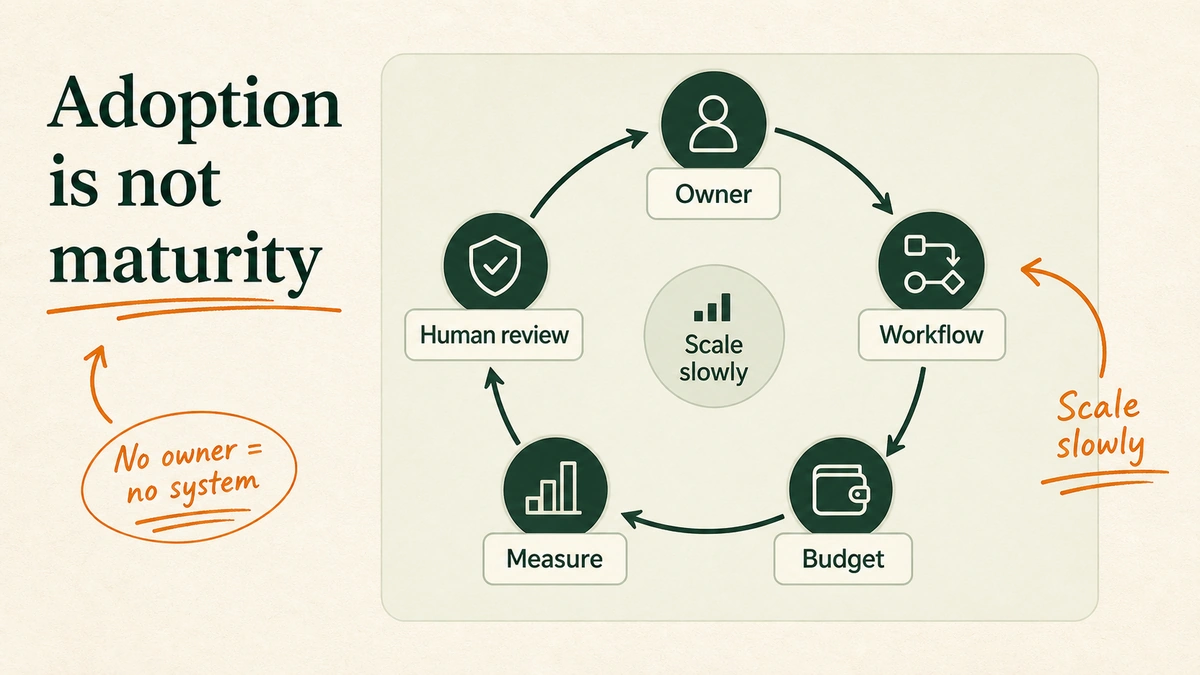
4. In 2026, only 7% of organizations had reached fully scaled AI deployment.
Stord called out the gap between adoption and maturity. Source 4
Operator read: This is where small teams can win. A 20-person brand with one clean loop can outperform a bigger brand with seven half-owned pilots.
5. In 2026, 92% of organizations planned to increase AI investment.
Same Stord report. High intent. Low maturity. Source 5
Operator read: Do not copy the market’s spend curve. Copy the market’s best operating discipline: clear use case, clean data, defined owner, review cadence.
6. In 2026, 99% of organizations still lacked a mature framework for full AI integration.
That is the stat I would underline. Source 6
Operator read: Your first AI hire should not be a prompt wizard. It should be someone who can map messy workflows and make the data boring.
7. In 2025, NVIDIA found 89% of retail and CPG respondents were using AI or assessing AI projects.
That was up from 82% in 2023. Source 7
Operator read: Adoption has crossed the “interesting” line. Now the advantage is implementation quality.
8. In 2025, 97% of NVIDIA retail and CPG survey respondents said AI spending would increase in the next fiscal year.
The budget signal is loud. Source 8
Operator read: If your paid media, ops, and CX tools all pitch AI upgrades this year, ask them which metric changes by Friday.
9. In 2026, Gorgias reported that 96% of ecommerce professionals use AI to perform their roles.
Gorgias showed AI role usage rising from 69.2% in 2024 to 77.2% in 2025 to 96% in 2026. Source 9
Operator read: Training matters less than workflow design. If everyone uses AI differently, the business learns nothing.
What do AI search and discovery statistics show?
“Generative AI-powered chat interfaces are changing how consumers act online.”
– Vivek Pandya, Adobe
10. In February 2025, Adobe found generative AI traffic to U.S. retail sites was up 1,200% versus July 2024.
Adobe based the retail analysis on more than 1 trillion visits to U.S. retail sites. Source 10
Operator read: AI referral traffic may still be small. Growth rate says you should start tracking it now.
11. During the 2024 holiday season, Adobe saw generative AI traffic to U.S. retail sites rise 1,300% year over year.
Cyber Monday was even sharper: 1,950% year over year. Source 11
Operator read: Create a GA4 / analytics view for AI referrals before Q4. You cannot optimize what lands in “referral” soup.
12. In Adobe’s 2025 U.S. survey, 39% of consumers had used generative AI for online shopping.
Adobe surveyed more than 5,000 U.S. respondents. Source 12
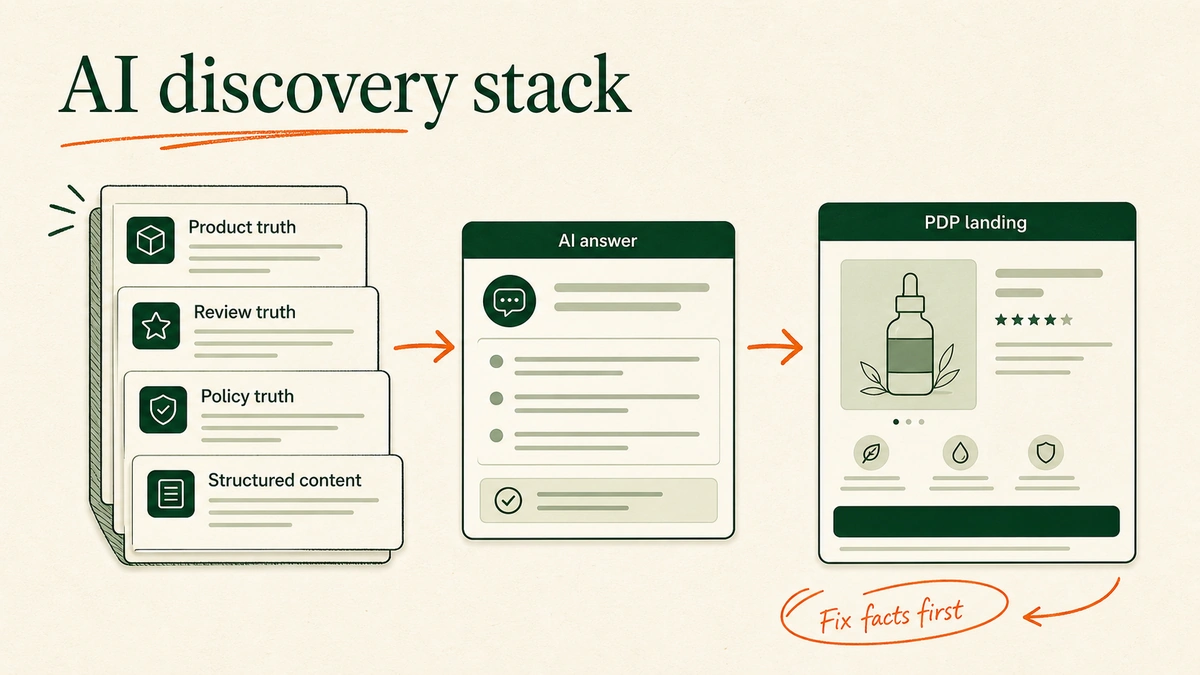
Operator read: This is not only early adopters anymore. Your product pages need to answer AI-generated buying questions cleanly.
13. In Adobe’s 2025 U.S. survey, 53% of consumers planned to use generative AI for online shopping that year.
That is planned behavior, not just curiosity. Source 13
Operator read: Add FAQ-style answers to PDPs. But make them useful. “Premium quality” is not an answer.
14. In Adobe’s 2025 U.S. survey, 55% of AI shopping users used it for research.
Research was the top listed shopping task. Source 14
Operator read: AI is mostly upstream right now. Feed it comparison facts, sizing facts, use cases, and policy facts.
15. In Adobe’s 2025 U.S. survey, 47% of AI shopping users used it for product recommendations.
That puts AI inside the recommendation path before the customer reaches your store. Source 15
Operator read: If your product data is thin, AI assistants will choose the clearer competitor.
16. In Adobe’s 2025 U.S. survey, 43% of AI shopping users used it to seek deals.
Deal seeking is a channel behavior, not just a coupon behavior. Source 16
Operator read: Discount logic, bundle value, shipping thresholds, and subscription savings need to be machine-readable and human-clear.
17. In Adobe’s 2025 retail data, generative AI visitors showed 8% higher engagement than non-AI traffic.
They lingered longer on retail sites. Source 17
Operator read: AI visitors may be better qualified researchers. Give them a page that closes the loop.
18. In Adobe’s 2025 retail data, generative AI visitors viewed 12% more pages per visit.
More pages can mean better exploration or unresolved questions. Source 18
Operator read: Watch which pages AI visitors hit next. If they bounce between PDP, FAQ, and returns, your PDP is missing an answer.
19. In Adobe’s 2025 retail data, generative AI visitors had a 23% lower bounce rate.
Lower bounce is useful. It is not revenue by itself. Source 19
Operator read: Track AI visitors by conversion stage. Treat them like high-intent assisted traffic until your own data proves otherwise.
20. Criteo’s 2026 commerce AI work found AI-referred visits converting at 1.5x the rate of other sources.
Criteo framed these visitors as often upper-funnel and net-new. Source 20
Operator read: Good. Still verify in your store. AOV, margin, and return rate decide whether the channel is actually good.
21. Criteo reported that more than 70% of AI-referred users land directly on product pages.
Criteo said that was up from around 50% six months earlier. Source 21
Operator read: Your PDP is becoming the new homepage. Fix clarity there first.
22. Criteo reported that 39% of shoppers already use AI for product discovery.
Discovery is moving from keyword to conversation. Source 22
Operator read: Build content around jobs-to-be-done, not only product names.
23. Criteo reported that 47% of shoppers use AI for comparison shopping.
Comparison is where vague positioning gets punished. Source 23
Operator read: If your category pages do not say who the product is for, who it is not for, and what it beats, AI has to guess.
What do personalization statistics show?
24. In 2025, NVIDIA found 60% of retail generative AI use cases centered on marketing content generation.
That was the top listed generative AI use case in the NVIDIA retail and CPG survey. Source 24
Operator read: Content generation is the easy entry point. It is also the easiest place to produce forgettable slop.
25. In 2025, NVIDIA found 44% of retail generative AI use cases involved predictive analytics.
This is closer to the operator layer: demand, cohorts, inventory, and timing. Source 25
Operator read: Predictive work needs better input data than content work. Start only where the source tables are trusted.
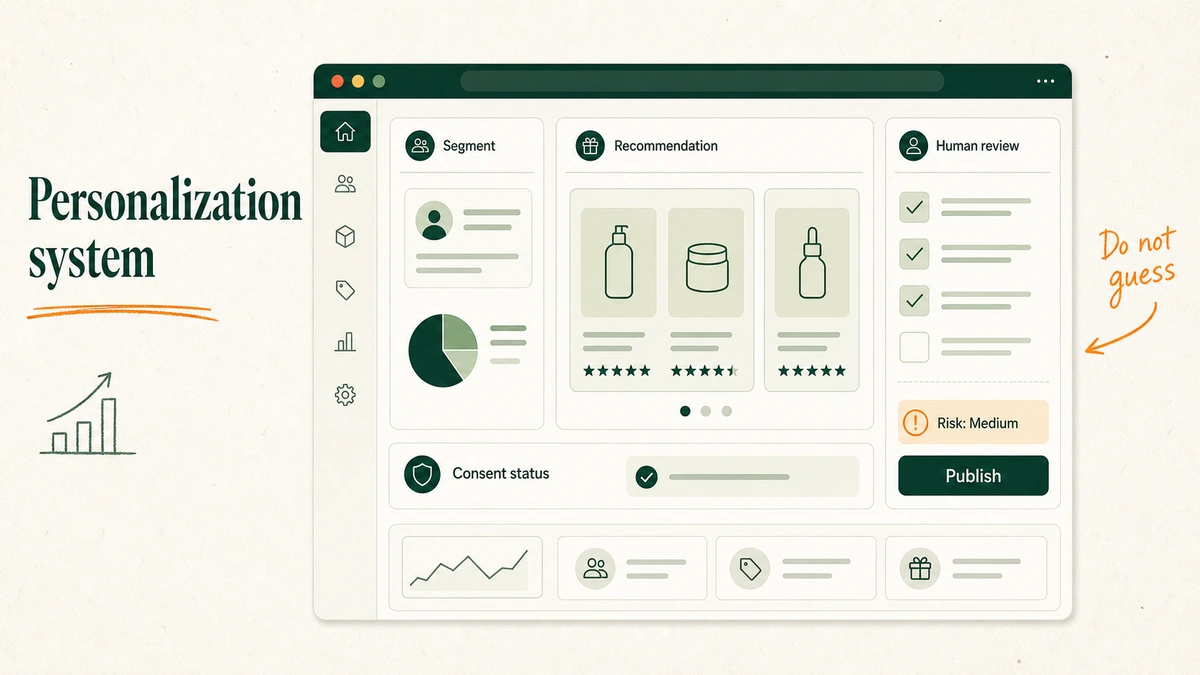
26. In 2025, NVIDIA found 42% of retail generative AI use cases involved personalized marketing and advertising.
Personalization is now a default promise in AI software. Source 26
Operator read: Personalization without consent, context, and frequency control becomes creepy fast.
27. In 2025, NVIDIA found 41% of retail generative AI use cases involved customer analysis and segmentation.
Segmentation is where AI can help teams move faster. Source 27
Operator read: Do not let AI create 47 segments nobody uses. Make it produce one next action per segment.
28. In 2025, NVIDIA found 40% of retail generative AI use cases involved digital shopping assistants or copilots.
The assistant layer is becoming normal. Source 28
Operator read: A shopping assistant is only useful if it knows product truth, order truth, policy truth, and escalation rules.
29. In 2026, SAP reported that 58% of consumers value localized content and product recommendations.
SAP tied this to brands understanding regional traditions and social norms. Source 29
Operator read: For US, UK, AU, and CA brands, “English” is not one market. Shipping, holidays, sizing, returns, and cultural references differ.
30. In 2026, SAP reported that 55% of consumers appreciate highly personalized content.
That number sits beside a warning: customers dislike wasted data collection and bad experiences. Source 30
Operator read: Personalization should remove friction. It should not announce how much you know.
31. In 2026, SAP reported that 50% of consumers believe their favorite brand uses data to improve interactions.
Favorite brands get more benefit of the doubt. Source 31
Operator read: AI works better after trust. Do not use AI to compensate for weak service basics.
What do retention and customer experience statistics show?
“The problem is not the promise of AI.”
– Manos Raptopoulos, SAP
32. In 2026, SAP reported that 37% of consumers want quicker customer service.
That is one of the basic expectations SAP surfaced in DTC statistics. Source 32
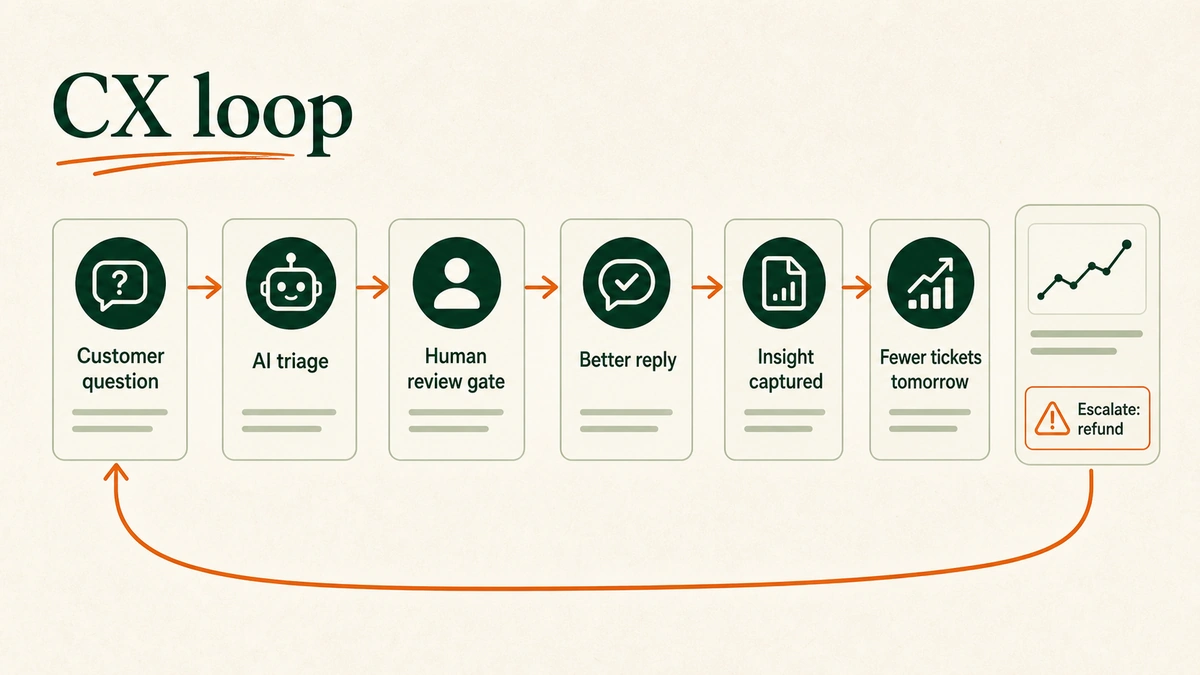
Operator read: AI support should start with triage, order-status summaries, and draft replies. Speed first. Autonomy later.
33. In 2026, SAP reported that 32% of consumers want faster delivery.
Delivery is still a customer experience feature. Source 33
Operator read: AI cannot fix a slow 3PL. But it can flag late orders, set expectations, and stop avoidable WISMO tickets.
34. In 2026, SAP reported that 32% of consumers want products always in stock.
Stock availability sits beside service and delivery in the basics. Source 34
Operator read: This is why AI-assisted inventory cleanup can matter more than another creative tool.
35. In 2026, Gorgias reported that 57% of ecommerce brands use AI for 26-50% of all customer interactions.
Gorgias also reported 37% expect AI to handle 51-75% within two years. Source 35
Operator read: Use this as a caution. When AI touches more interactions, QA and escalation design become more important, not less.
36. In 2026, Gorgias reported that 96% of ecommerce AI use cases include customer support automation.
Support automation was the highest use case listed. Source 36
Operator read: If you are implementing ChatGPT for Shopify customer support or Claude for Shopify support, separate standard replies from risky decisions.
37. In 2026, Gorgias reported that 88% of ecommerce AI use cases include product recommendations.
Recommendations now sit next to support as a core AI workflow. Source 37
Operator read: Recommendation quality depends on catalog quality. Bad attributes in, bad recommendations out.
38. In 2026, Gorgias reported that 69% of ecommerce AI use cases include automated tracking and status updates.
That is a practical use case for lean teams. Source 38
Operator read: Order-status automation is a good first build because the answer can be checked against order truth.
What do AI profit and ops statistics show?
39. In 2025, NVIDIA found 87% of retail and CPG respondents said AI increased annual revenue.
That is a broad retail/CPG stat, not DTC-only. Still useful. Source 39
Operator read: Do not accept “revenue increased” without attribution. Ask: incremental revenue, assisted revenue, or just correlation?
40. In 2025, NVIDIA found 94% of retail and CPG respondents said AI reduced annual operational costs.
Cost reduction is one of AI’s cleaner cases. Source 40
Operator read: For small DTC teams, cost savings often show up as fewer manual checks, fewer escalations, and fewer spreadsheet hours.
41. In 2026, Stord reported that 95% of retailers said AI helped decrease annual operating costs.
Stord’s report echoes the cost side of the AI story. Source 41
Operator read: Cost reduction is not glamorous. It is often the most reliable first AI ROI.
42. In 2026, Stord reported 20% to 30% lower inventory levels through predictive demand modeling and dynamic segmentation.
This is an operations stat, not a marketing stat. Source 42
Operator read: Inventory AI belongs close to human review. A wrong product description is annoying. A wrong stock decision costs money.
43. In 2026, Stord reported that 74% of ecommerce leaders view AI as their primary 2026 driver.
The operator agenda is shifting toward AI. Source 43
Operator read: “Primary driver” is too broad for a roadmap. Turn it into one quarterly system: support, inventory, retention, or creative QA.
44. In 2026, Stord reported that self-correcting networks delivered 65% better service levels and 15% lower logistics costs.
Stord framed this around intelligent routing and self-correcting networks. Source 44
Operator read: Most 5-50 FTE brands should not start here. Start by making delivery promises, exceptions, and carrier issues visible.
45. In 2026, Gorgias reported that 51% of ecommerce AI use cases include inventory control.
That puts inventory in the middle of the AI stack, not the fringe. Source 45
Operator read: Connect this to AI profitability loops for Shopify stores. Margin leaks are often operational, not creative.
46. In 2026, Gorgias reported that 36% of ecommerce AI use cases include dynamic pricing or discounting.
Pricing automation is already on the table. Source 46
Operator read: Put a human in the loop. Discounts change margin, brand positioning, and customer expectations.
What do AI data and trust statistics show?
47. In 2026, Stord reported that 30% of consumers would never allow AI to handle shopping or access payment information.
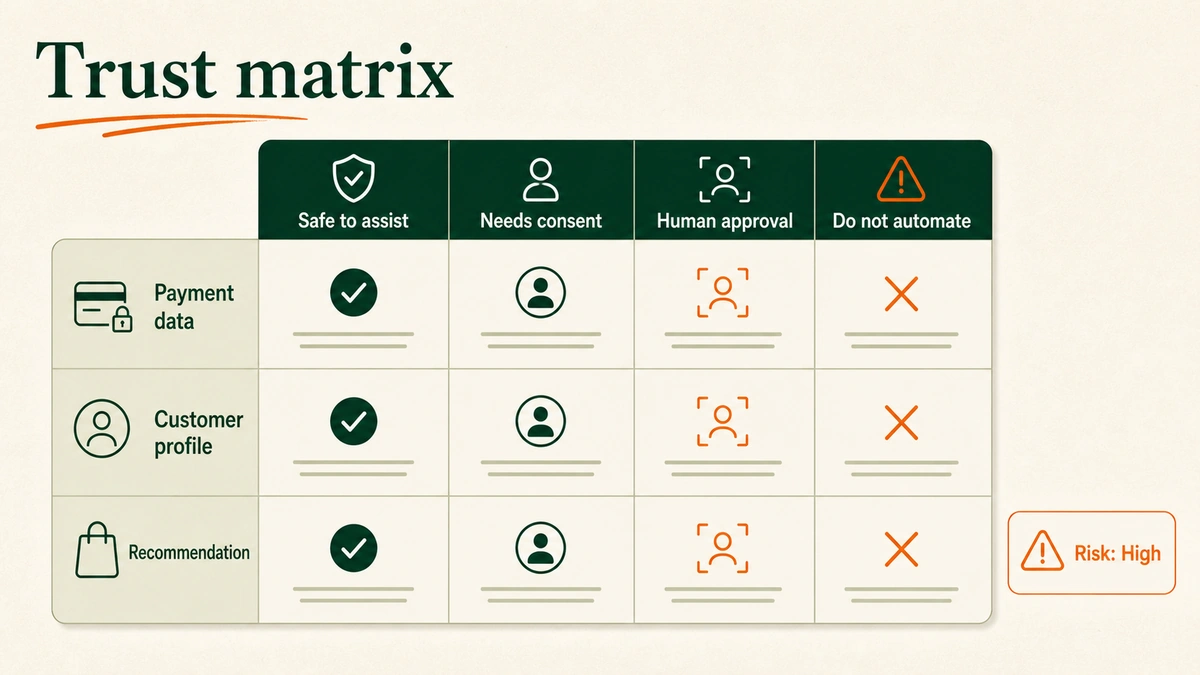
That is the trust ceiling. Source 47
Operator read: Do not rush agentic checkout. Start with AI-assisted research, support, and product matching where the customer still controls the final click.
48. In 2026, Stord reported that 16% of consumers are very comfortable with AI using payment information to complete purchases.
That is a much smaller group than the AI-curious group. Source 48
Operator read: Comfort with AI shopping is not the same as comfort with AI payment.
49. In 2026, Stord reported that 21% of consumers are open to AI-assisted shopping if they can review transactions first.
Review before purchase matters. Source 49
Operator read: This is the pattern for DTC AI generally: draft, recommend, summarize, flag. Then let the human approve.
What would I do with these numbers?
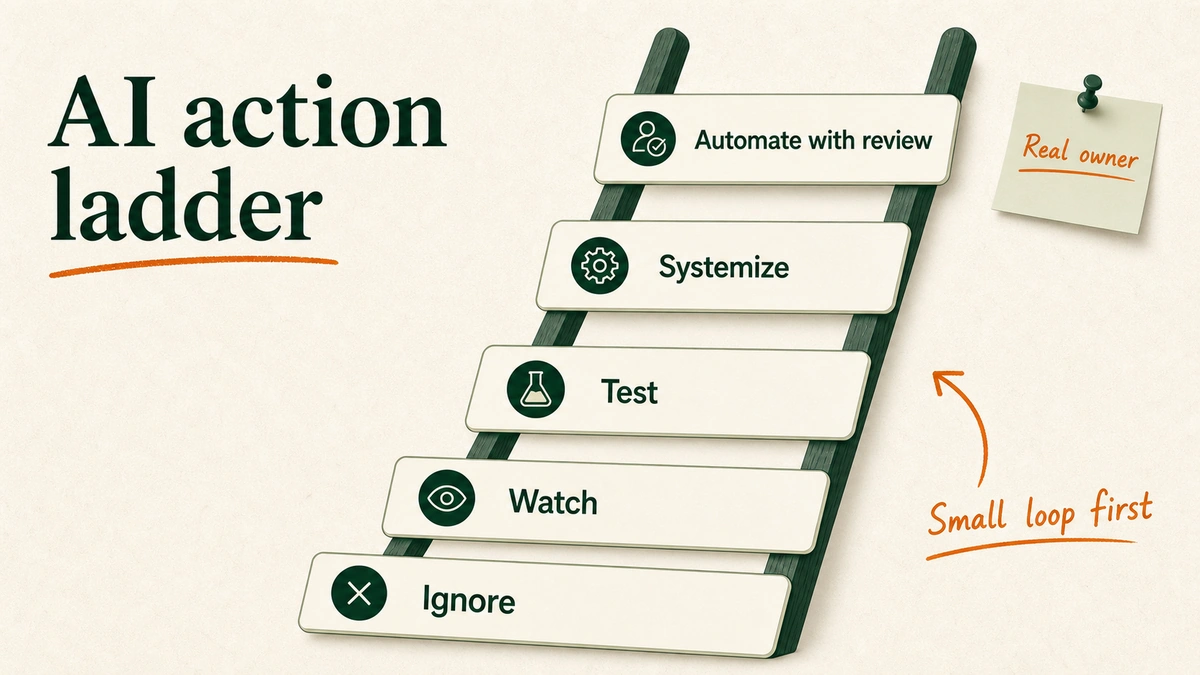
I would not build a “use AI everywhere” roadmap.
We test AI systems by asking one dull question first: did this help the team make a better decision this week?
I would build five small loops:
- Support: AI summarizes tickets, drafts standard replies, and escalates risky cases.
- Inventory: AI flags low-stock, vendor, 3PL, and return mismatches before customers feel them.
- Product pages: AI turns customer questions into PDP facts, comparison blocks, and FAQs.
- Retention: AI finds segments with clear next actions, not clever labels.
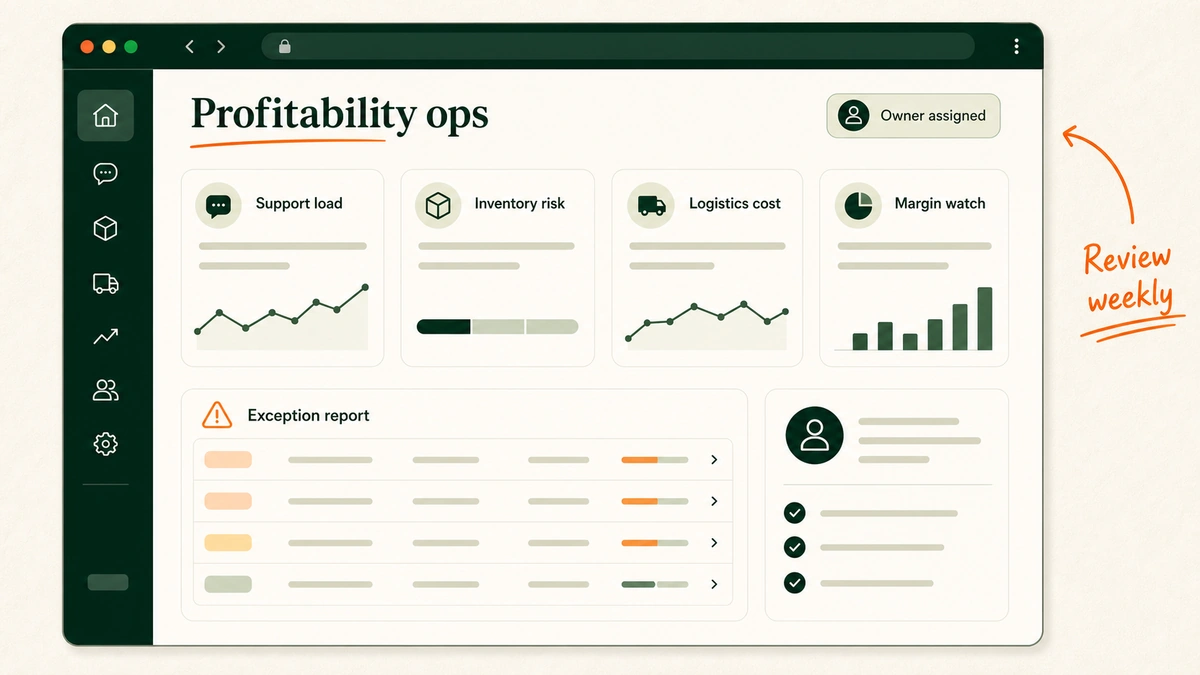
- Reporting: AI writes the weekly exception report every operator actually reads.
That is enough.
The stat that matters is not 93% adoption or 1,200% traffic growth. It is whether your team makes one decision faster, with fewer mistakes, every week.
Small loop. Real owner. Human review.
Then expand.

No comment yet, add your voice below!